
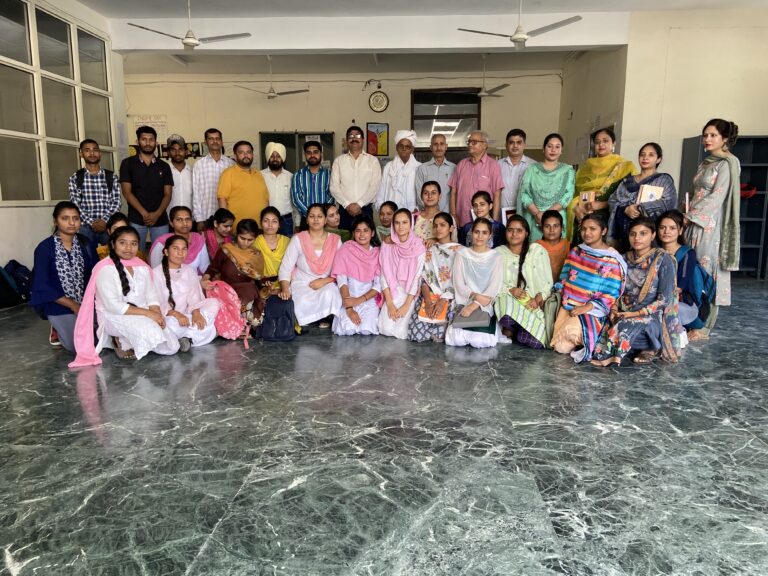
(न्यूज़ हंट)- गुरु नानक देव विश्वविद्यालय अमृतसर के तत्वावधान में पठानकोट जिला अग्रणी कॉलेज गुरु नानक देव यूनिवर्सिटी कॉलेज सुजानपुर के पंजाबी विभाग द्वारा आयोजित पंजाबी भाषा मंच के तहत, छात्रों ने जिला भाषा कार्यालय के सहयोग से आयोजित एक समारोह में क्षेत्र के प्रतिष्ठित लेखकों से मुलाकात की। पठानकोट। गौरतलब है कि कॉलेज प्राचार्य डॉ. राकेश मोहन शर्मा और जिला भाषा अधिकारी डॉ. सुरेश शर्मा जी की पहल पर जुड़वा बच्चों के राजा कहे जाने वाले श्री यशपाल शर्मा जी और श्री फरतुल चंद फकार जी ने इस दौरान विद्यार्थियों के साथ अपने जीवन, साहित्यिक रचना, सृजन के क्षणों और अनूठे अनुभवों को साझा किया। सृजन श्री यशपाल शर्मा जी के जीवन की जानकारी दी कृष्ण जी ने ही विस्तृत जानकारी दी। उन्होंने बताया कि यशपाल शर्मा जी, जिन्होंने पहले हिन्दी उपन्यासों में महत्वपूर्ण स्थान प्राप्त किया था, अपने उपन्यास आंसुओं की बाढ़ के साथ पंजाबी उपन्यासों में प्रवेश करते हैं। बाद में श्री यशपाल शर्मा जी ने अपने श्री फारतुल चंद फकार जी की रचना की पंजाबी भाषा के सबसे विपुल लेखकों में से एक ने भी छात्रों के साथ अपना जीवन साझा किया। इस अवसर पर राकेश मोहन शर्मा ने कहा कि विद्यार्थी जीवन में इसका बहुत महत्व है। जिला भाषा अधिकारी ने समारोह में भाग लेने के लिए अतिथियों का धन्यवाद किया और इस तरह के समारोह के आयोजन में सहयोग के लिए कॉलेज प्राचार्य और पंजाबी विभाग की भी सराहना की। पूरे आयोजन के दौरान डॉ. विशाल कुमार ने सूत्रधार की भूमिका निभाई। गुरजीत कौर, प्रो. सुखदीप कौर के अलावा गीतांजलि, प्रो. सुखजिंदर कौर, प्रो. अर्जुन सिंह, प्रो. जशनजोत सिंह जोहल, प्रो. उम प्रकाश पंकज आदि उपस्थित थे।
भंगी चोअ में पड़ती जमीनों पर निशुल्क लगाएंगे फलों के बाग: तलवाड़।
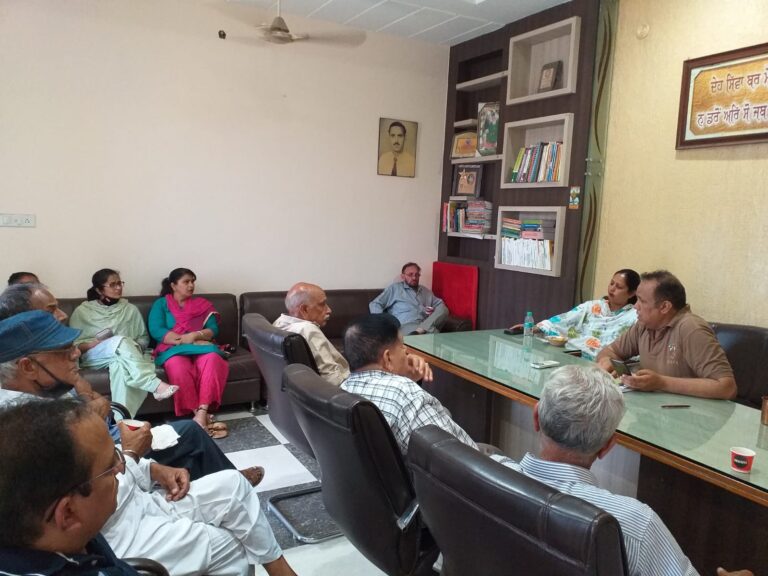
होशियारपुर (न्यूज़ हंट)- भंगी चोअ में जिन मालिकों की जमीन पड़ती है, उस के ऊपर नि:शुल्क फलों के बाग लगाना व उन्हे पाल पोस कर उन जमीनें के मालिकों को देने पर अब कार्य शुरू होगा। उपरोक्त शब्द यूथ डिवैलपमैंट बोर्ड पंजाब के पूर्व चेयरमैन संजीव तलवाड़ ने आज अपने कार्यालय में पर्यावरण प्रेमियों के साथ एक बैठक के दौरान अपने संबोधन में कहे। तलवाड़ ने कहा कि सिर्फ दो दिन लगे बिजली के कटों ने ही जनता को बेबस कर दिया। सोचने की बात है कि अगर यह कट ज्यादा समय के लिए लगने लगें, तो आदमी के पास जीवन जीने का क्या रास्ता है। उन्होने कहा कि इंसानी गलतियों क कारण धरती का तापमान जिस कद्र बढ़ रहा है, उस से प्रकृति का विनाश होना सुनिश्चित है। अगर हम ने इस विनाश को रोकना है, तो अपने साथ साथ अन्य लोगों को भी प्रकृतिक साधनों के रख रखाव के लिए प्रेरित करना होगा।
बैठक को संबोधित करते हुए प्रोजैक्ट कलीन एंड ग्रीन होशियारपुर के पालक एस. के. पोमरा ने कहा कि प्रकृति के सभी साधनों को बचाने का एकमात्र उपाय पेड़ लगाना ही है, इस लिए एक लक्ष्य तय कर हमें इस ओर बढऩा चाहिए। बैठक में सर्व सम्मति से निर्णय लिया गया कि भंगी चोअ में छोटे छोटे जंगल बना कर प्रकृति के रख रखाव की शुरूआत की जाए।
इस अवसर पर भाजपा महिला मोर्चा, पंजाब की प्रदेश उपाध्यक्ष नीति तलवाड़, आर्युवैदिक डाक्टर एस. एस. मानकू, डा. रंजीत रिषी, समाज सेवी बी. एस. जसवाल, सरबजीत कौर, कमलजीत कौर, मंगत राम व अन्य वातावरण प्रेमी भी उपस्थित थे।
AAI successfully conducts flight trials using GAGAN based LPV approach Procedure at Kishangarh Airport
ndia becomes the first country in Asia Pacific Region to achieve such a landmark
Airports Authority of India (AAI)today successfully conducted a Kishangarh Airport, Rajasthan light trial using GAGAN (GPS Aided GEO Augmented Navigation)based LPV Approach Procedures. The successful trial is a great achievement and major milestone in the field of Air Navigation Services (ANS) in the history of the Indian Civil Aviation Sector. India is the first country in Asia Pacific Region to achieve such a landmark.
LPV (Localizer Performance with Vertical Guidance) permits aircraft guided approaches that are operationally nearly equivalent to Cat-IILS, without the need for ground-based navigational infrastructure. The service relies on the availability of GPS and GAGAN Geo Stationary Satellites (GSAT-8, GSAT-10 and GSAT-15), launched by ISRO.
GAGAN is an Indian Satellite-Based Augmentation System (SBAS) jointly developed by the Airports Authority of India and ISRO. It is the first such system developed for India and neighbouring countries in the equatorial region. GAGAN System was certified by DGCA in 2015 for Approach with Vertical Guidance (APV 1) and en-route (RNP 0.1) operations. There are only four Space-Based augmentation systems available in the world namely India (GAGAN), the US(WAAS) Europe (EGNOS) and Japan (MSAs). GAGAN is the first such system developed for India and neighbouring countries in the equatorial region.
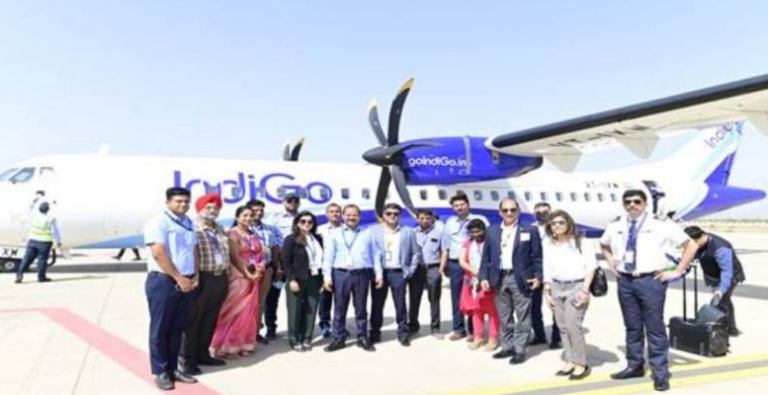
Indigo Airlines using its ATR aircraft has flown an Instrument Approach Procedure (IAP) with LPV minima of 250ft, using GAGAN Service. The tests at Kishangarh Airport were performed as part of initial GAGAN LPV flight trials along with the DGCA team on- board. After the final approval by DGCA, the procedure will be available for usage on commercial flights.
LPV is a Satellite-Based Procedure that has been used by the aircraft for landing purposes today at Kishangarh Airport (Rajasthan). LPV approaches will make it possible to land at airports not equipped with expensive Instrument Landing Systems, which include many small regional and local airports. Lowering the decision height up to 250 ft provides a substantial operational benefit in poor weather and low visibility conditions. Thus, any airport which hitherto would require higher visibility minima will be able to accept aircraft benefitting remote airports which are devoid of precision approach capability equipment.
A number of airports including airports under the Regional Connectivity Scheme (RCS) are being surveyed for the development of GAGAN based LPV Instrument Approach Procedures so that suitably equipped aircraft can derive maximum benefit in terms of improved safety during landing, reduction in fuel consumption, reduction in delays, diversions and cancellations etc.
AAI in coordination with Indian National Centre for Ocean Information Services (INCOIS) has implemented the GAGAN Message Service (GMS) through which alert messages to fishermen, formers, and disaster-affected people will be sent on the occurrence of natural disasters, calamities, such as flood, earthquake etc. The additional capabilities of GAGAN are also being explored to utilize it in non-aviation fields such as Railways, Surveying, Agriculture, Power sector, Mining etc.
Design of GAGAN procedures requires a meticulous survey of the airport environment surroundings and obstacle surfaces. These data are correlated with the complex aircraft approach maneuvers and further simulated in software to ensure the safety of the procedure designed. These procedures can be developed for any of the airports in India for landing without the help of an Instrument Landing System. These types of procedures make aircraft land in low visibility conditions almost equivalent to Category-1 Instrument Landing System (ILS).
Currently Indigo (35), SpiceJet (21), Air India (15), Go First (04), Air Asia (01) and other airlines have aircraft in their fleet capable to use these LPV procedures. Airports Authority of India has developed 22 such procedures and some are under the process of approval from DGCA for commercial flight operations. In line with Govt. of India initiative of AtamNirbhar Bharat, the development of LPV procedures for all civil airports is also in progress to make the Indian civil aviation sector more Self-Reliant,
AAI is making all efforts for ensuring the availability, continuity and integrity of Air Navigation services through such technological enhancement in India. With this India becomes the first country in Asia to have a satellite-based landing procedure.
The airport authority of India would like to place on record its sincere appreciation to ISRO for designing and implementing the GAGAN program from 2002 onwards. DGCA was highly proactive in ensuring the operationalization of GAGAN. AAI also appreciates the cooperation of Indigo airlines in executing the safe flight trials at Kishangarh.
NITI Aayog Holds Day-long Conference on Aspirational Districts Programme
Stories of Change Report Released Detailing Best Practices across the Aspirational Districts
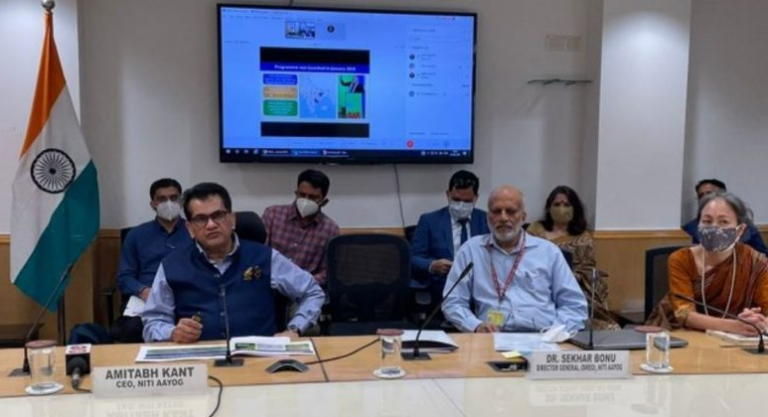
As part of the Azadi ka Amrit Mahotsav, NITI Aayog held a day-long conference on the Aspirational Districts Programme (ADP).
The conference, ‘Sehbhagita se Samriddhi’, saw wide participation from District Collectors and Central Prabhari Officers of Aspirational Districts, officials from Union Ministries and NITI Aayog, and representatives from development partners.
A report, titled ‘Stories of Change’, on 30 innovative interventions by the Aspirational Districts was also released. These interventions—selected on the basis of the usage of behavioural principles, innovation, replicability and potential for impact—demonstrate how behavioural insights can drive outcomes on the ground.
Drawing attention to the high expectations of the people for health service delivery, NITI Aayog Member Dr VK Paul said we needed to strive towards the saturation of key maternal and child health schemes and focus on last-mile service delivery.
Addressing the participants, NITI Aayog CEO Amitabh Kant said, ‘ADP has emerged as a unique platform for development partners to work with the government at the grassroots level. Their active engagement has led to significant progress.’ He highlighted how the partnership between the district teams and the development partners has been instrumental in improving the impact of schemes while improving the understanding of critical requirements of the districts.
Five sessions on ‘State Capacity’, ‘Education’, ‘Agriculture’, ‘Skill Development and Livelihood’, and ‘Health’ were held. The ‘State Capacity’ session focused on challenges and emerging best practices for improving last-mile service delivery through behaviour change communication and efficient data management. Local initiatives led by districts, such as that in Dumka in Jharkhand for strengthening block- and panchayat-level functionaries, were discussed.
Efforts of the government and development partners for addressing learning loss among children during the pandemic were discussed in the session on ‘Education’. Special initiatives led by districts such as Virudhunagar, Tamil Nadu, and Nuapada, Odisha, for addressing learning gaps and bringing back out-of-school children were presented.
The session on ‘Agriculture’ focused on challenges that directly affect farmers such as dwindling water tables, small per capita land holdings, and climate change. It also focused on developing targeted action plans, infrastructure development for the value chain and ensuring access to market and technology. Several initiatives such as water rejuvenation projects undertaken in Aspirational Districts were shared.
The ‘Skill Development and Livelihood’ session focused on developing demand-based and context-specific livelihoods in the Aspirational Districts, particularly in the context of SHGs and other micro-enterprises. Special initiatives led by districts such as Dantewada in Chhattisgarh in addressing challenges through Farmer Producer Organizations and effective methods of tracking livelihood opportunities and benefits accorded to the households were discussed.
The session on ‘Health’ focused on the role of development partners in supporting existing government staff to build capacity, particularly in initiatives to reduce malnutrition, and anaemia among women through rice fortification, millet-based recipes under the Integrated Child Development Scheme, and NITI’s pilot project to streamline the Government of India’s Anaemia Mukt Bharat interventions in five districts in Jharkhand.
ONGC inks MoU with Norway’s Equinor to collaborate on E&P, clean energy

Oil and Natural Gas Corporation Limited (ONGC) has signed a Memorandum of Understanding (MoU) with Equinor ASA, the Norwegian state-owned multinational energy company. The MoU was inked on 26 April 2022 in New Delhi for collaboration and partnership in areas of upstream Exploration & Production, midstream, downstream and Clean energy options, including Carbon Capture Utilization & Sequestration (CCUS). Equinor is the leading operator on the Norwegian continental shelf, present in around 30 countries worldwide.
The MoU was signed during the visit of a high-level delegation of Norway to India. Union Minister of Petroleum and Natural Gas Shri Hardeep Singh Puri, Norwegian Foreign Minister Ms Anniken Huitfeldt, ONGC CMD Dr Alka Mittal and Executive Vice President of Equinor Ms Irene Rummelhoff were present on the occasion.
As per the agreement, both ONGC and Equinor will collaborate with each other in the field of upstream oil and gas, midstream, marketing and trading, besides exploring further options in low carbon fuel, renewables, Carbon Capture Storage (CCS) as well as Carbon Capture Utilization and Sequestration (CCUS) opportunities in India.
The MoU is valid for two years under which both companies have agreed to work together in the areas identified.
News Hunt Daily Evening E-Paper
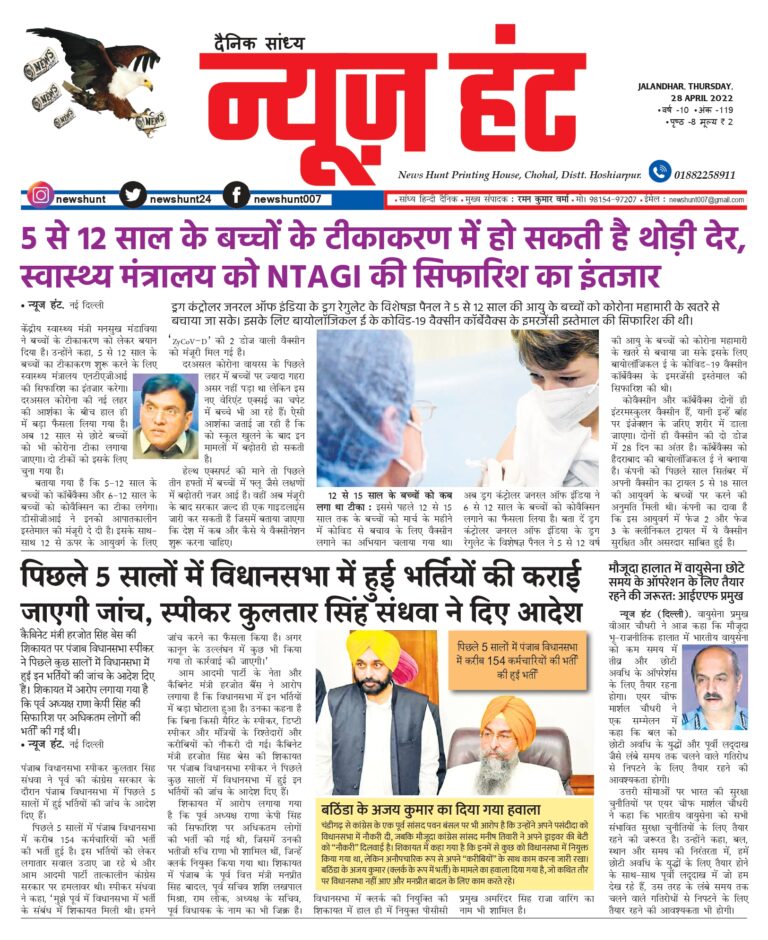
28 April 2022
Page 1
#news #breakingnews #epaper #Newshunt #latestnews #LatestUpdates
News Hunt Daily Evening E-Paper
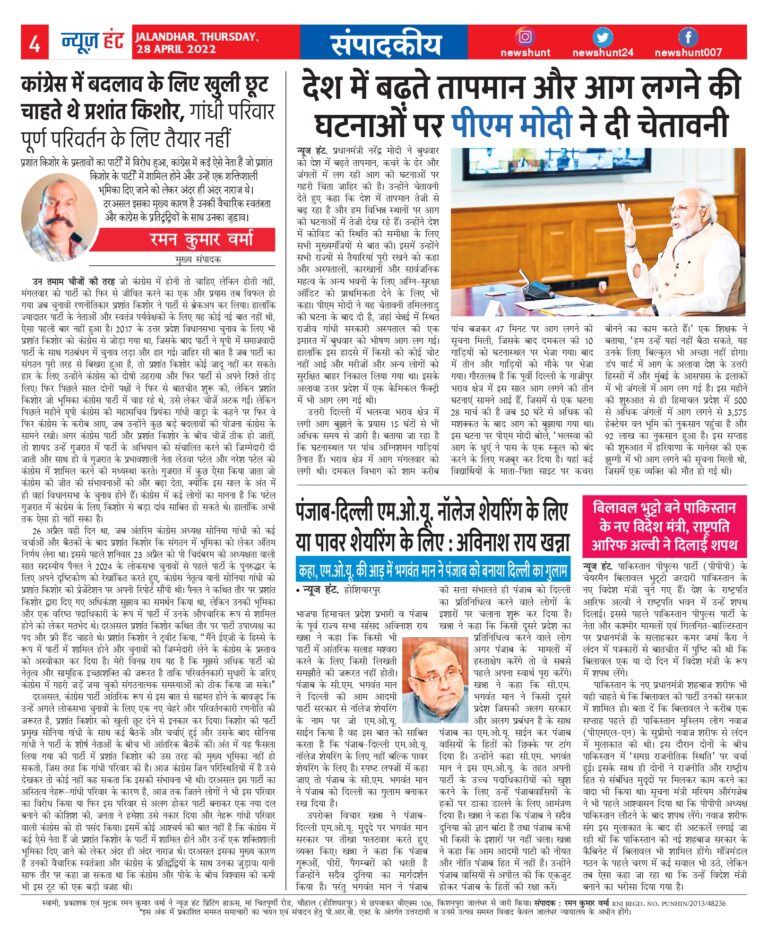
28 April 2022
Page 4
#news #breakingnews #epaper #Newshunt #latestnews #LatestUpdates
News Hunt Daily Evening E-Paper
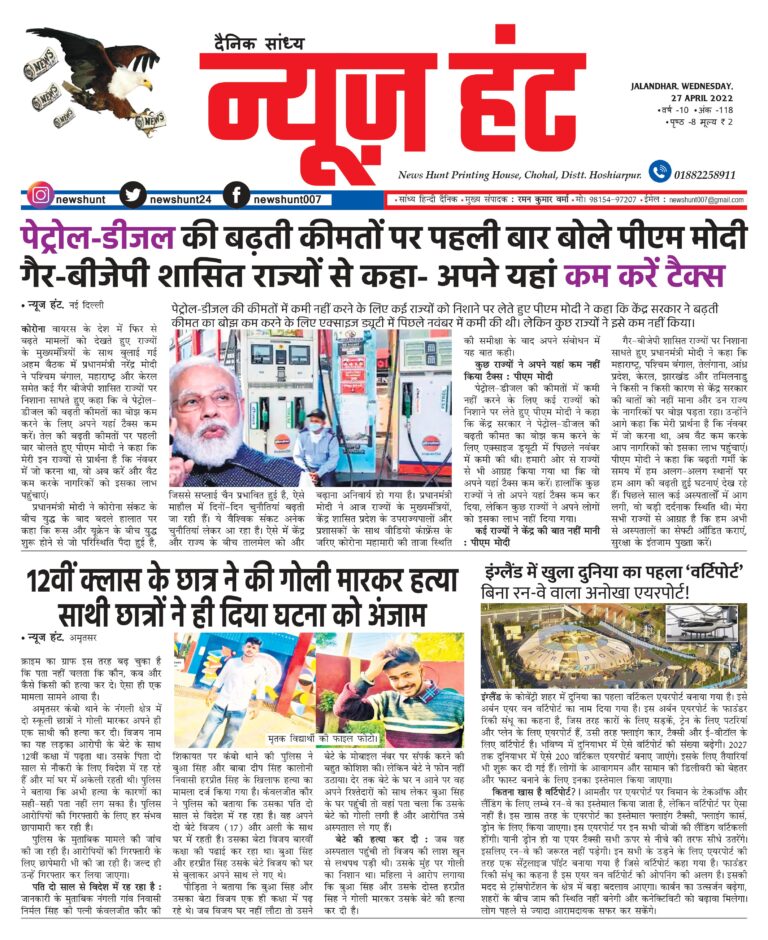
27 April 2022
Page 1
#news #breakingnews #epaper #Newshunt #latestnews #LatestUpdates
News Hunt Daily Evening E-Paper
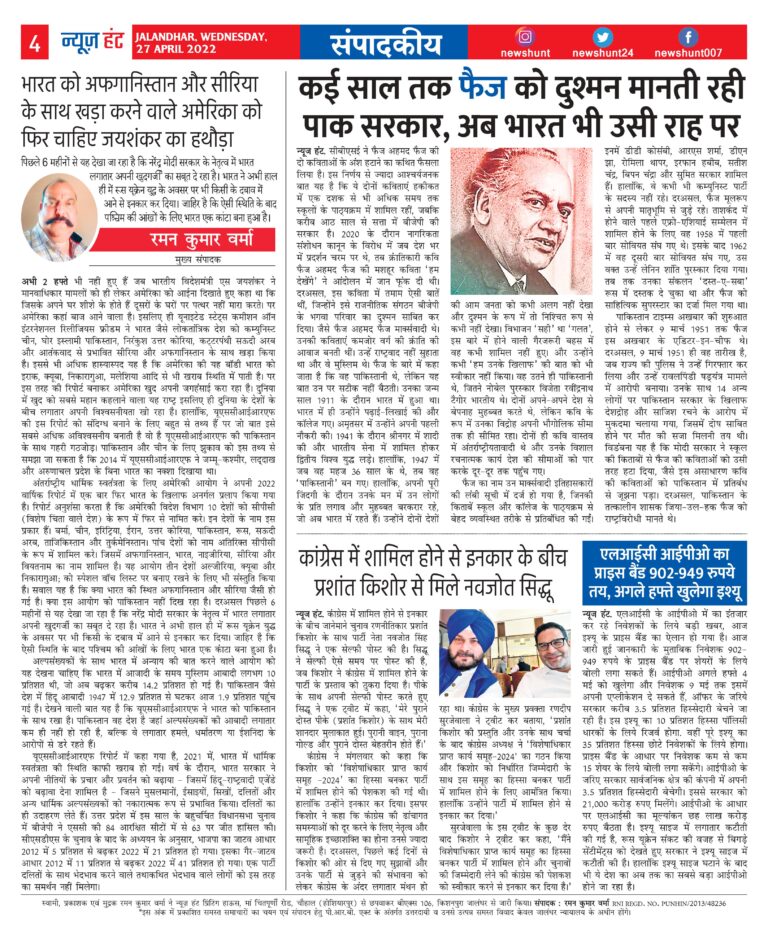
27 April 2022
Page 4
#news #breakingnews #epaper #Newshunt #latestnews #LatestUpdates
News Hunt Daily Evening E-Paper
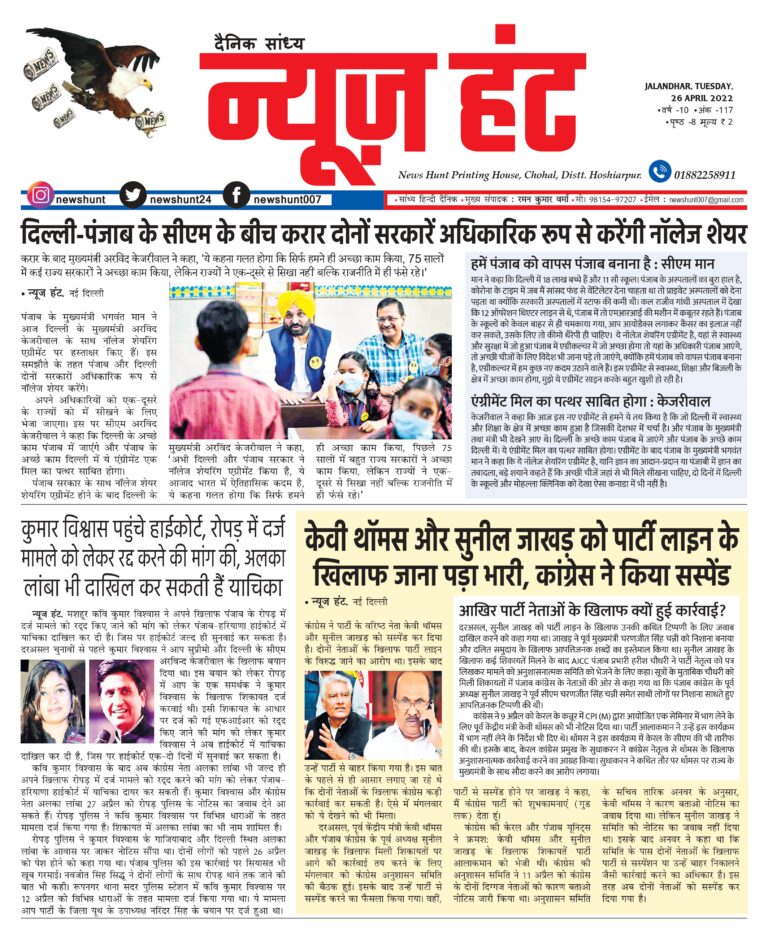
26 April 2022
Page 1
#news #breakingnews #epaper #Newshunt #latestnews #LatestUpdates